DINOPAY - Sinclair Oil
- 4.4
- Rating
- 100.00K
- Installs
- Free
- Price
 Analysis by App-foxy
When I use DINOPAY - Sinclair Oil, I think of it less as a general shopping app and more as a mobile companion for a stop at a Sinclair station. That distinction matters. Its value appears when I am already thinking about fuel, a quick purchase, or the practical details around a station visit—not when I want a broad marketplace with endless product categories. The app is free, aimed at Everyone, and developed by PetroZone Mobile, so it is approachable for a wide range of drivers.
My first impression is that the experience depends heavily on being connected at the right moment. A station-focused app needs current information and responsive communication when I am on the road, and that makes the quality of the connection part of the experience. With a stable mobile signal, the app feels like a useful layer between planning a stop and completing it. With a weak signal, the convenience can become less predictable, which is something I would keep in mind before relying on it during a long drive.
How DINOPAY fits into an actual station visit
The strongest use case is simple: I am driving, I want to deal with a Sinclair stop efficiently, and I prefer having the relevant interaction on my phone instead of handling every step as a separate task. Rather than opening a browser, searching broadly, and then trying to work out whether the result is useful for the exact stop I have in mind, a dedicated app gives the visit a more focused starting point.
You May Also Like

 AccuWeather: Weather Radar
AccuWeather Review: A Quick, Clear Forecast for Everyday Decisions
For everyday plans, the best forecast is the one you can understand quickly. AccuWeather makes rain timing, radar, and local conditions easy to act on, with a few trade-offs.

 Hill Climb Racing
Why Hill Climb Racing Still Turns Crashes Into One More Run
A tiny car, a bumpy hill and one more upgrade: Hill Climb Racing keeps resurfacing because its simple chaos makes every near-miss feel personal.

 AliExpress - Shopping App
AliExpress Makes Global Shopping Feel Personal, but Shoppers Bear the Risk
AliExpress turns a global marketplace into a pocket-sized discovery engine. Its reach is useful, its shopping loop compelling, and its trade-offs easy to miss.

 Lords Mobile: Kingdom Wars
Lords Mobile Is a Kingdom-Building Routine, Not a Quick Match
A case-by-case verdict on the building, battles, device demands, and social commitments that make Lords Mobile rewarding for some players and exhausting for others.

 PDF Scanner app - TapScanner
TapScanner Makes Paperwork Easier to Capture, Check, and Share
TapScanner makes scanning with a phone feel less like a rescue operation and more like a dependable step in getting work done. Its capture tools are useful, though not flawless.

 Block Blast!
 Shows How Much a Puzzle Game Can Leave Out
A quiet grid game shows why puzzle players increasingly value instant clarity, repeatable skill and low-pressure play—and where the genre still needs to catch up.
More From Our News Desk
View All News


That focus is also the app's main limitation. It is not trying to replace a full shopping platform, a navigation app, or a general payment wallet in every situation. If I need detailed route planning, broad price comparison across many fuel brands, or a complete record of household purchases, I would still reach for a different tool. DINOPAY makes more sense as a Sinclair-specific utility.
In everyday use, I would open it before pulling into a station rather than waiting until I am parked at the pump. That small habit gives the app time to load while the vehicle is stationary and lets me check what I need before the visit becomes rushed. It also avoids the awkward situation of trying to operate a phone while managing a car, passengers, and a busy forecourt.
The best way to use DINOPAY is as a preparation tool, not as something to explore while driving. I find that planning the interaction before reaching the station makes the whole experience feel calmer. The app can be useful in the few minutes before a stop, but it should never become a reason to handle the phone behind the wheel.
Why connectivity changes the experience
Network access is especially important for an app used away from home. At a desk, a slow response is merely annoying. At a fuel station, it can happen when I am in a hurry, standing outdoors, dealing with weather, or trying to finish a transaction before moving the car. That makes connection quality more noticeable than it would be in a casual shopping app.
I would not treat the app as a guarantee that every action will work without a live connection. Instead, I approach it as a connected service and make sure the phone has a usable signal before beginning. If I am entering a remote area, I prefer to prepare earlier, while the connection is reliable, rather than assume that the app will be equally useful at the destination.
This is one of the less obvious trade-offs of a station app: convenience is tied to timing. Opening it a few minutes earlier can make the difference between a smooth visit and a frustrating wait. The app itself may be straightforward, but the surrounding conditions—signal strength, phone battery, and how busy the stop is—shape the result just as much as the interface does.
Using it from the car without making the trip harder
DINOPAY is most comfortable when I use it before I start moving or after I have safely parked. I would not recommend trying to browse or complete anything while driving, even if the action seems quick. A passenger can handle the phone, or I can set up the relevant step before leaving. That workflow is more practical than treating the app like a dashboard control.
For a regular commute, I can imagine opening it at home or before leaving work, when I have time to think. For a spontaneous stop, I would wait until I am safely parked. The difference sounds minor, but it reduces pressure and gives the app a fairer chance to respond properly.
Another useful habit is keeping the phone ready before arriving. A nearly empty battery, aggressive background restrictions, or a phone that has not been updated in a long time can all turn a simple station visit into a troubleshooting exercise. These are not unique problems to DINOPAY, but they matter more when the app is being used at a specific physical location and at a specific point in a journey.
What happens when the connection is weak
The most frustrating scenario is not necessarily a complete outage. A weak or unstable connection can be worse because the app may appear to be working while a page, confirmation, or next step takes too long to respond. When I am standing beside a vehicle, uncertainty is more inconvenient than a clear failure.
My practical approach is to pause rather than repeatedly tap. Repeated attempts can make it harder to tell whether the first request succeeded, especially when the screen has not updated yet. I would check the visible result, give the connection a moment, and only retry after confirming that nothing has gone through. This is a small but important habit for any connected payment or station-related workflow.
If the app does not respond, I would first move to a place with a better signal if that is safe and practical, then reopen the relevant screen. I would also check whether the phone has switched between mobile data and a weak Wi-Fi network. A phone connected to an unreliable hotspot can sometimes feel connected while loading very slowly. Turning off an unhelpful Wi-Fi connection may restore a more dependable mobile path, although the exact steps depend on the phone.
I would not keep troubleshooting in a dangerous position or block a pump while experimenting. If the app becomes a problem, the sensible choice is to use the station's ordinary alternative process where available or move aside and resolve the issue safely. A mobile convenience should never create pressure at the forecourt.
Recovery habits that save time
One of my preferred recovery habits is to close the app only after checking whether the previous action visibly completed. Force-closing immediately can remove useful context from the screen. If nothing happened, reopening the app may clear a temporary loading issue; if something did happen, repeating the action could create confusion. The key is to confirm the state before starting over.
I also recommend keeping the app current. The installed version is 6.0.1, and using the current release is generally the sensible way to avoid problems that may already have been addressed. The app has been available since April 24, 2015, so it is not a brand-new experiment, but an older app can still behave differently across modern phones and operating-system updates. A current installation is a better starting point than an outdated one.
The minimum operating-system requirement is Android 8.0. That is helpful for people using many older Android phones, although compatibility alone does not guarantee a smooth experience on every device. Screen size, system settings, battery management, and network behavior can still affect how comfortable the app feels. Before a long trip, I would open it once at home and make sure the basic flow behaves normally on my phone.
Keeping mobile data use sensible
For most station visits, I would not expect a focused shopping app to be a major data burden, but I still prefer to use it deliberately. I avoid opening it repeatedly just to browse when I have no immediate need. Checking what matters, completing the task, and closing it is a cleaner routine than leaving it active throughout a journey.
People with limited mobile data should be especially careful when travelling. I would use a trusted Wi-Fi connection for general updates when convenient, then rely on mobile data only when I actually need the app on the road. I would not connect to an unknown public network merely to make the app load faster, particularly when handling anything sensitive.
Battery use deserves similar attention. A station app may be open only briefly, but navigation, weak signal, screen brightness, and other travel apps can already be draining the phone. I would charge before setting out and avoid keeping several demanding apps active at once. This is a realistic trade-off: the app may simplify a stop, but it still depends on the same phone resources as everything else running during a trip.
I also like to separate planning from execution. If I am deciding where to stop, I can use my usual navigation or mapping tool first. Once I have chosen a Sinclair location, DINOPAY can serve the more specific part of the visit. That division prevents me from forcing one app to do jobs it was not designed to handle and reduces unnecessary switching while travelling.
Who will appreciate it most
DINOPAY is a good fit for drivers who regularly choose Sinclair stations and want a dedicated mobile option for station-related shopping. It is also appealing to people who prefer a focused app over a browser page, especially when they already know where they want to stop and simply want the process organized around that brand.
It can be useful for a household with several drivers as well. Each person can decide whether the dedicated app fits their routine, while the main benefit remains the same: the station interaction is kept separate from unrelated shopping and travel tools. I would still encourage everyone using it to become familiar with the basic flow before depending on it during a busy trip.
The app is less convincing for someone who rarely visits Sinclair stations. If my stops are spread across many brands, a general fuel-finder or navigation tool may be more useful because it keeps the wider route and station choices together. Likewise, if I already have a payment method and routine that work perfectly at the pump, adding another app may not save enough time to justify the extra step.
It is also not my first choice for someone who expects a completely self-contained travel solution. DINOPAY should be paired with ordinary driving tools rather than treated as a replacement for maps, route planning, or broader price research. Its narrower purpose is a strength when it matches the trip, but a weakness when it does not.
How it compares with ordinary alternatives
The simplest alternative is using the station directly without an app. That approach has fewer technical variables: no loading screen, no mobile-data concern, and no need to keep another application updated. For a driver who values minimal setup and visits only occasionally, the traditional method may remain better.
A mobile browser is another option. It can be convenient when I do not want a dedicated installation, but a focused app can feel more natural for repeat use. The trade-off is that the app takes space on the phone and becomes one more item to maintain. I see DINOPAY as worthwhile when the Sinclair-specific workflow is something I expect to repeat, not as an automatic upgrade for every driver.
General fuel and navigation apps have a different advantage: breadth. They are better when I am comparing locations, planning a route, or deciding between brands. DINOPAY is more specialized. I would use the general tool to decide where to go and the Sinclair app to support the stop itself. That combination makes more sense to me than expecting either app to cover every part of the journey.
What the public response suggests
The app has an average rating of 4.4 from around 5.1 thousand ratings, with roughly 2.8 thousand written reviews and over 100 thousand installs. Those figures suggest that it has found a real audience rather than being an obscure experiment. I treat that as useful context, not proof that every driver will have the same experience.
Public ratings can hide the details that matter most to an individual user. A person with a strong connection, a compatible phone, and frequent Sinclair visits may find the app very convenient. Someone travelling through weak-signal areas or using it only once may judge it more harshly. In my view, the app's relevance to your routine matters more than the headline score.
The Everyone content rating also makes it broadly approachable from an age-classification standpoint. That does not remove the need for sensible phone use around traffic and fuel equipment, but it does mean the app is positioned as an ordinary shopping utility rather than a specialized or mature-content product.
My practical routine for using it
If I were preparing for a trip, I would first update the app and open it while connected to a reliable network. I would then decide which part of the station visit I actually need it for, rather than launching it without a clear purpose. Before driving, I would make sure the phone is charged and that my navigation plan is already settled.
On arrival, I would park safely before interacting with the screen. If the app loads normally, I would complete the necessary steps without jumping between several unrelated screens. If the connection hesitates, I would avoid repeated taps, wait briefly, and verify the result before trying again.
After the visit, I would close the app and keep my attention on the road. This routine sounds cautious, but it is exactly what makes a connected station app useful: it supports the stop without taking over the journey. The goal is not to spend more time on the phone; it is to make the relevant task more orderly.
My connectivity verdict
After looking at where DINOPAY works best, I see it as a practical, brand-specific shopping app rather than an essential tool for every driver. Its strongest quality is focus. When I am using a Sinclair station and have a reliable connection, the dedicated experience can be more convenient than piecing together a browser, a general shopping tool, and station information.
Its main weakness is equally clear: the benefit depends on the phone, the network, and the timing of the visit. I would not rely on it blindly in an area where connectivity is uncertain, nor would I install it if I almost never use Sinclair stations. In those cases, ordinary station service or a broader navigation app may be the better choice.
For the right user, however, the free price removes much of the risk of trying it. PetroZone Mobile has built an app with a clear everyday purpose, and its long availability, current version, and established user base make it reasonable to test. I would recommend DINOPAY - Sinclair Oil to regular Sinclair customers who want a focused mobile option and are comfortable treating connectivity as part of the workflow. I would skip it only if my station choices are too varied or if I strongly prefer keeping every fuel-related task outside dedicated apps.
FAQs for DINOPAY - Sinclair Oil
01What is DINOPAY and how does it work?
DINOPAY is a mobile app designed by Sinclair Oil to streamline the payment process at their gas stations. Users can link their credit or debit cards to the app, allowing for contactless payments directly from their smartphones. By using secure transactions, it aims to enhance user convenience and reduce time spent at the pump.
02Is the DINOPAY app secure for transactions?
Yes, the DINOPAY app is designed with security as a top priority. It employs advanced encryption to safeguard users’ financial information during transactions. Additionally, the app requires authentication, such as a PIN or biometric verification, ensuring that unauthorized users cannot access your payment details.
03Can I use DINOPAY at all Sinclair Oil locations?
DINOPAY is available at most Sinclair Oil locations, but it’s advisable to check within the app for participating stations. The app includes a location feature that helps you find nearby Sinclair stations where DINOPAY is accepted, ensuring you can plan your visits accordingly.
04Are there any rewards or discounts for using DINOPAY?
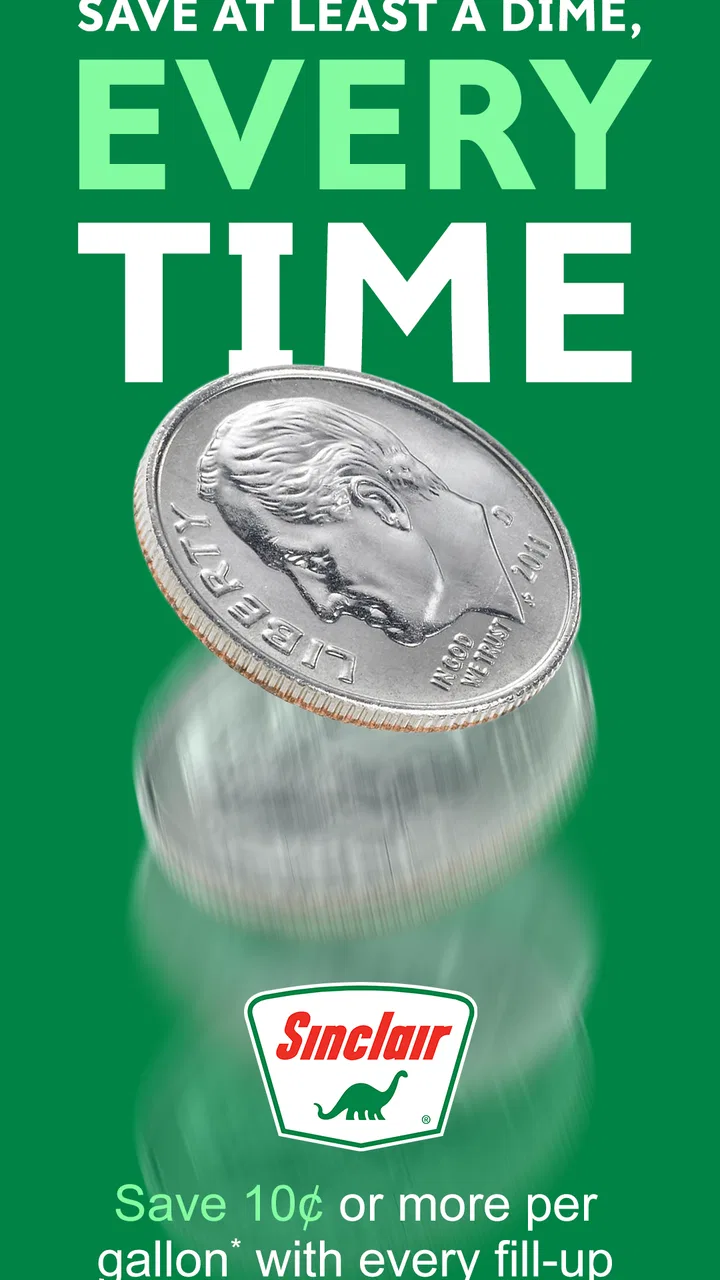
Yes, Sinclair Oil often provides promotions and discounts for users who pay through the DINOPAY app. These offers can include cents off per gallon or special deals on in-store purchases. Users are encouraged to regularly check the app for current promotions to maximize their savings.
05What should I do if I encounter a problem with the DINOPAY app?
If you experience issues with the DINOPAY app, you can contact Sinclair Oil's customer support directly through the app or their official website. They offer assistance with troubleshooting, transaction inquiries, and any other technical difficulties to ensure a smooth user experience.
Pros
- Simple and user-friendly interface.
- Quick and easy payment processing.
- Secure transactions with encryption.
- Rewards program for loyal users.
- Supports multiple payment methods.
Cons
- Limited to Sinclair Oil locations.
- Occasional app crashes reported.
- No offline mode available.
- Limited customer support options.
- Slow updates for new features.

DINOPAY - Sinclair Oil
Gallery